Best room divider solutions for office flexibility
Not every divider delivers flexibility, privacy and polish. Here's an honest comparison of the main office room-divider options — and where operable walls earn their place.
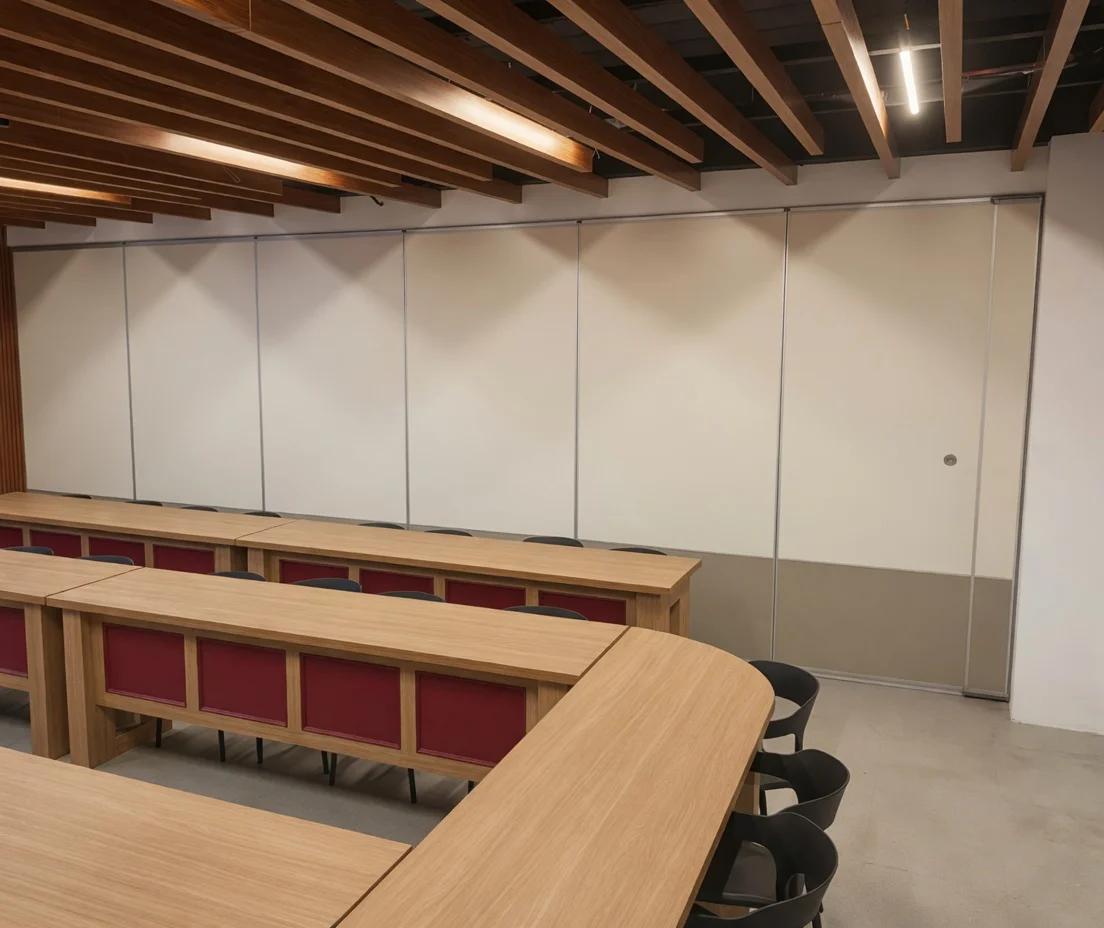
“Room divider” covers everything from a hanging curtain to an engineered acoustic wall — and they are not remotely equivalent. If your goal is genuine office flexibility with privacy and a professional finish, it’s worth understanding how the main options actually compare.
Here’s a clear-eyed look at each, and where operable walls fit.
How to judge a divider
Four criteria separate the options: acoustic privacy (does it block speech?), flexibility (how fast can you reconfigure?), finish (does it look professional?), and durability (will it last?). Most dividers do one or two well; few do all four.
The cheapest divider that doesn’t deliver privacy is more expensive than the right one — because it gets replaced.
Curtains & soft dividers
Cheap and quick, but acoustically weak — fabric drapes reduce a little echo but barely block speech. Fine for visual separation or temporary zoning; inadequate where privacy or a premium look matters.
Furniture & movable screens
Bookcases, planters and freestanding screens zone a space without construction, but they’re partial-height, offer little sound control, and consume floor space. Good for soft visual cues, not for private rooms.
Fixed glass partitions
Sleek and light-filled, with decent acoustics when sealed — but they’re fixed. Once installed, that room is permanent, which is the opposite of flexibility. Excellent for a stable layout; wrong when the space needs to change.
Operable walls
Operable (movable) walls are the only option that combines all four criteria: high acoustic privacy when closed, full reconfiguration in under a minute, a professional made-to-order finish, and decades of durability. They cost more than a curtain — and deliver categorically more, which is why they’re the standard for serious flexible workplaces. See the full benefits of movable partitions, and for the fixed-vs-movable question read operable walls vs traditional room dividers.
Which model fits your office
If an operable wall is the right category, the model depends on height, span and acoustic target:
Put them side by side on the comparison table, or use our choosing guide to narrow it down.
The verdict
For light visual zoning on a budget, screens and curtains have a place. For a permanent layout, fixed glass is elegant. But for true office flexibility with privacy — the thing most modern offices actually need — an operable wall is the best divider solution, full stop.
Frequently asked questions
What is the best room divider for an office that needs privacy?
An operable (movable) wall. It’s the only common divider that combines strong acoustic privacy when closed with fast reconfiguration, a professional finish and long-term durability.
Are glass partitions or operable walls better?
Fixed glass partitions look great but lock the layout permanently. Operable walls — including glass-faced ones — give you the same polish plus the ability to open the space up again, which is better where flexibility matters.
Do cheap room dividers like curtains block sound?
Barely. Curtains and freestanding screens provide visual separation and minor echo reduction, but they don’t deliver speech privacy. For private rooms you need a sealed, dense partition such as an operable wall.
Tell us about your space and we'll recommend the right wall.
Get a tailored quote, or book a 30-minute demo to see the glide and acoustic seal for yourself.