Operable walls vs. traditional room dividers
Should you choose a movable operable wall or a traditional fixed divider? This head-to-head compares flexibility, acoustics, cost and durability so you can decide with confidence.
Defining the two
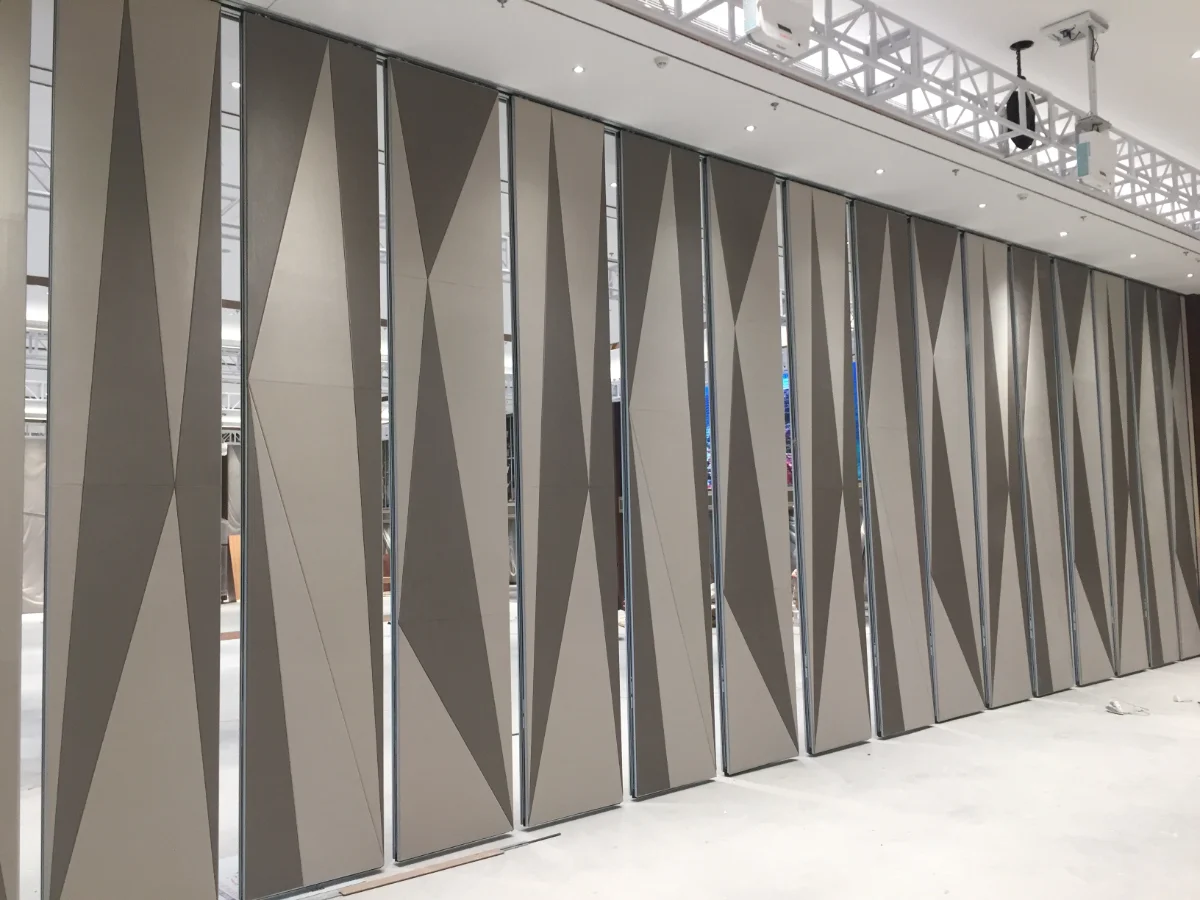
A traditional divider is built once and stays put — drywall, a fixed glass partition, or a permanent stud wall. An operable wall is a series of acoustic panels on an overhead track that open and close on demand. One is permanent; the other is flexible. Everything else follows from that.
Ask one question first: will this space ever need to change? Your answer decides the category.
Flexibility
No contest. A traditional wall is fixed forever; reconfiguring means demolition. An operable wall changes the room in under a minute, as often as you like. If the space serves more than one purpose — ever — flexibility points decisively to operable. See maximizing flexibility with sliding dividers.
Acoustic privacy
Traditional walls can achieve high sound isolation, and so can operable walls — modern systems reach up to STC 56. The key difference: an operable wall delivers that privacy only when closed, then reopens. Both can be private; only one can also disappear. For the detail, read why STC rating matters.
Cost & lifetime value
A traditional wall is cheaper to build once. But every time the layout must change, you pay again in demolition and reconstruction. An operable wall costs more upfront and then adapts for free for decades. Over a building’s life — especially with changing needs — the operable wall’s total cost of ownership is frequently lower.
Installation & disruption
Building a traditional wall means contractors, dust and a space out of use for days — repeated every time you change it. An operable wall is installed once; after that, every reconfiguration is instant and clean. Less disruption is a recurring saving, not a one-time one.
Finish & aesthetics
Both can look excellent. Traditional walls offer a seamless monolithic surface; operable walls offer made-to-order finishes — fabric, glass, melamine, timber-look — that you can even mix. Explore the finishes range to see the options.
Which model, if you go operable
If flexibility wins and operable is your category, match the model to your space:
Compare them spec-for-spec on the VersaWall range.
Which is right for you?
Choose a traditional divider when the layout is permanent and will never change. Choose an operable wall when the space must flex — for different group sizes, schedules, or future growth. For most modern offices, hotels and schools, that flexibility is exactly the requirement, which is why operable walls so often win. Still weighing it up? Start with how to choose the right operable wall.
Frequently asked questions
What is the difference between an operable wall and a traditional room divider?
A traditional divider (drywall or fixed glass) is built permanently in one place. An operable wall is made of acoustic panels on an overhead track that open and close on demand, so the same space can be divided or opened in under a minute.
Are operable walls as soundproof as fixed walls?
A well-specified operable wall can reach up to STC 56 and deliver speech privacy comparable to many fixed walls when closed — with the added benefit of reopening the space when you need it.
Is an operable wall worth the higher upfront cost?
In spaces that change use, usually yes. A fixed wall is cheaper once but costs again at every reconfiguration. An operable wall adapts for decades with no further construction, often lowering total cost of ownership.
Choose the right partition with confidence.
Get a tailored quote, or book a 30-minute demo to see the glide and acoustic seal for yourself.