Maximizing flexibility with sliding wall room dividers
A sliding wall divider is only as flexible as the way you plan around it. Here's how to design layouts, scheduling and operation so one space delivers many — without friction.
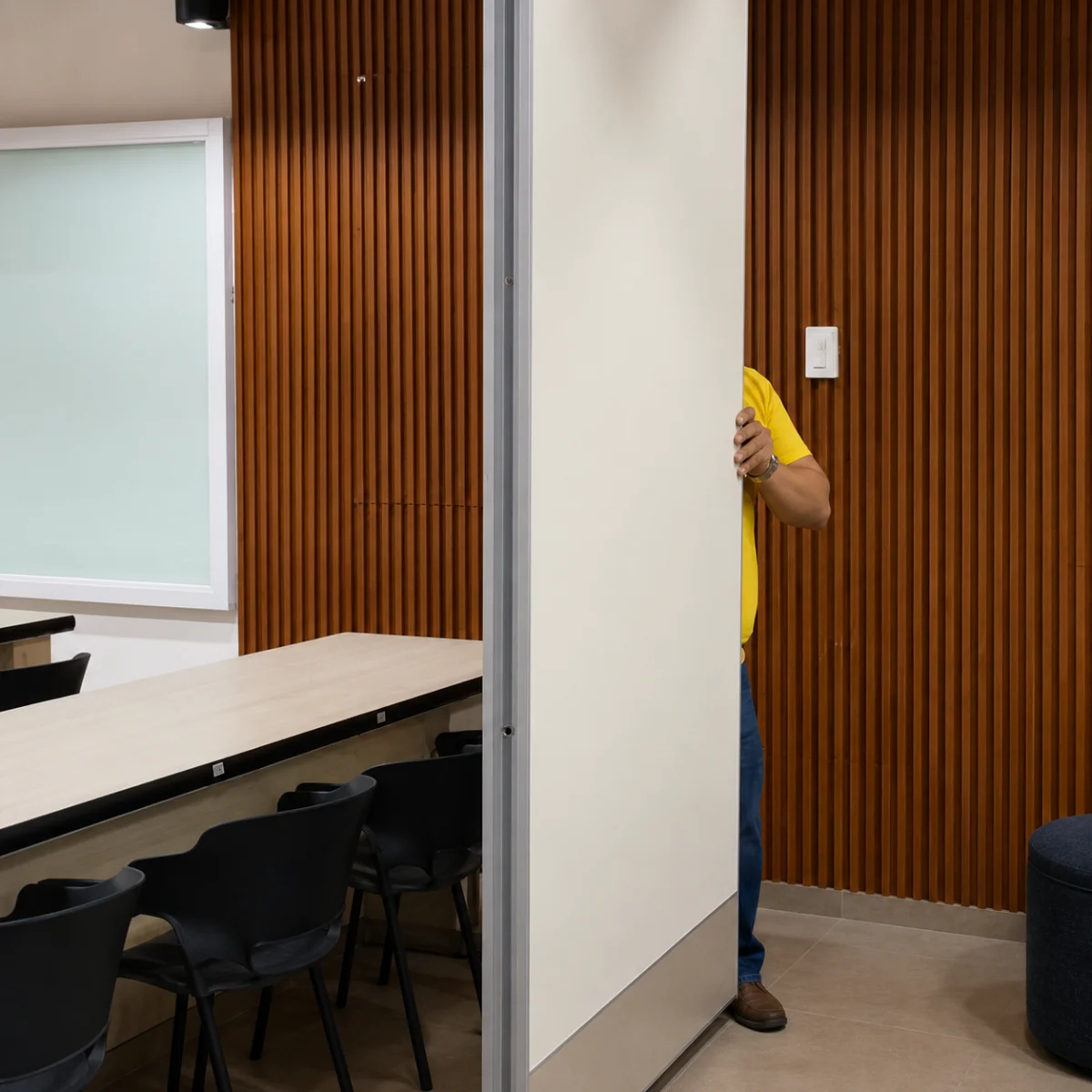
A sliding wall room divider is the simplest way to make one room behave like several. Panels glide along an overhead track to close off a zone, then retract to reopen it — no construction, no downtime. But the flexibility you actually get depends on how you plan around the divider, not just the divider itself.
Here’s how to maximize what a sliding partition can do for a multi-use space.
Flexibility isn’t a feature you buy once — it’s a layout you design and a habit you build.
What sliding dividers unlock
The core win is configurability: a hall becomes two seminar rooms, a showroom becomes a private viewing suite, a function room scales to the size of the booking. Because one person can reconfigure it in under a minute, the space adapts at the pace of your schedule — see the broader benefits of movable partitions.
Design for multiple layouts
Before specifying the wall, sketch every configuration the space must serve — fully open, split in two, or partial. Position the track so each layout works for circulation, sightlines and power/AV access. A divider planned around real use patterns feels effortless; one bolted on as an afterthought always fights the room.
Think in modes, not just open/closed
Many sliding systems support partial closure, letting you create a smaller breakout while leaving the rest open. Designing for these in-between modes multiplies the usefulness of a single wall.
Flexibility is also scheduling
The hardware enables flexibility; your booking process delivers it. Make reconfiguration a normal, expected step in how rooms are scheduled, and the space earns its keep. When the wall is genuinely easy to operate, staff use it without hesitation — which is the whole return.
Keep operation effortless
Friction kills flexibility. A divider that is heavy, jams, or needs two people will quietly default to “left open.” Specify a top-hung system on curved rollers, with no floor track to trip over and a smooth, single-person glide. This is the difference between a wall that’s used daily and one that’s ignored.
Plan the stacking pocket
When open, panels park somewhere. Designing a discreet stacking pocket — a recess or cupboard — keeps the parked wall out of sight and the open layout clean. Overlooking this is the most common flexibility-killer in otherwise good spaces.
Finishes that suit every mode
Since the divider is visible in some configurations and hidden in others, choose finishes that work both ways. Glass panels keep a divided space feeling open; fabric adds warmth and absorption. You can mix them — explore the finishes range.
Choosing the right system
Match the system to your spans, ceiling height and acoustic needs. For tall or wide multi-use halls, a higher-performance platform is worth it. Compare options on the VersaWall range, and for a full decision framework read how to choose the right operable wall.
Frequently asked questions
How quickly can a sliding wall divider be reconfigured?
A well-engineered top-hung sliding divider can be opened or closed by one person in under a minute, which is what makes frequent daily reconfiguration practical.
Can a sliding divider partially close a room?
Many operable systems support partial configurations, letting you create a smaller breakout area while leaving the rest of the space open — multiplying the layouts one wall can serve.
What stops a sliding divider from being used?
Friction. If the wall is heavy, lacks a smooth roller system, or has no planned stacking area, it tends to be left open. Specifying easy single-person operation and a stacking pocket solves this.
Tell us about your space and we'll recommend the right wall.
Get a tailored quote, or book a 30-minute demo to see the glide and acoustic seal for yourself.