How much does an operable wall cost in the Philippines?
There's no single sticker price for an operable wall — and that's a good thing. Here's an honest breakdown of what actually drives the cost, how to budget realistically, and how to get an accurate quote for your space.
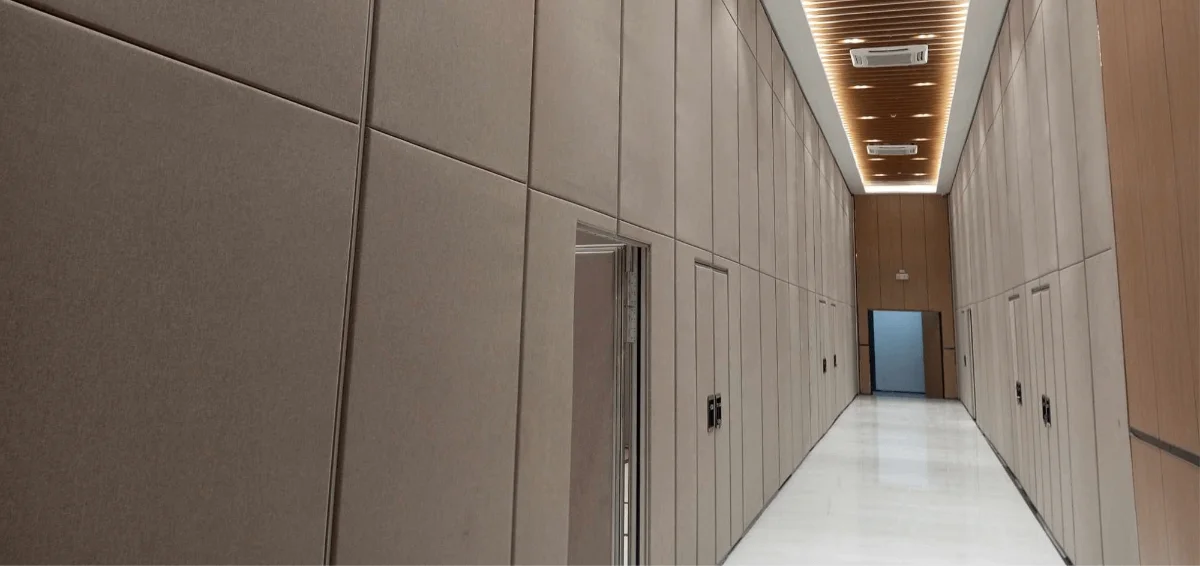
Why there’s no fixed price
”How much does an operable wall cost?” is the most common question we hear — and the honest answer is: it depends entirely on your space. An operable partition wall is a made-to-order system, not an off-the-shelf product, so the price reflects your dimensions, acoustic needs, finish and installation. This guide explains exactly what moves the number, so you can budget with confidence and avoid surprises.
An operable wall is priced like a tailored suit, not a t-shirt — the cost follows the spec, and the spec follows your space.
Every operable wall is built to a specific opening, acoustic target and finish. A 3-metre classroom divider and a 12-metre ballroom partition are different products engineered to different loads — so quoting a single “price per square metre” without seeing the project would be misleading. Understanding the drivers below lets you estimate where your project sits before you ever request a quote.
The six cost drivers
Six factors account for almost all of the variation in operable wall pricing. Get clear on these and you’ll understand any quote you receive.
1. Size & panel height
The biggest driver. A larger opening needs more panels and more material; a taller panel needs heavier engineering and a stronger track to carry the load safely. Doubling the height does more than double the structural demand — which is why our taller platforms cost more than lightweight ones. Measure your opening width and floor-to-ceiling height first; they frame everything else.
2. Acoustic rating (STC)
Higher sound isolation costs more, because it requires denser, multi-layer panels and a more complete sealing system. A general meeting room rated around STC 42 is more economical than a confidential boardroom at STC 50+. Specify the rating your space genuinely needs — no more, no less. Our guide to why STC rating matters helps you choose the right target.
3. Finish & materials
The visible surface is a real cost lever. Standard melamine is the most economical; premium fabrics, timber-look laminates and tempered glass cost more. Because the wall is a large surface, finish choice noticeably affects the total — but it’s also where you express the interior, so it’s worth getting right. Explore the finishes range to see the options.
4. Doors, track & installation
Three practical add-ons round out the quote:
- Pass doors — a single or double pass door integrated into a panel adds cost but greatly improves day-to-day usability.
- Track & structure — the overhead track must carry the panel weight; higher capacity tracks cost more, and the supporting structure above the ceiling may need assessment.
- Installation — professional installation and delivery to your site are part of the investment, and they directly affect real-world acoustic performance.
5 & 6. Durability and total cost of ownership
The two cost drivers buyers most often overlook are durability and lifetime value. A cheaper wall with weak rollers may jam, get used less, and need replacing sooner — making it more expensive over time. A well-engineered system lasts decades and keeps getting used, which is where the return lives. Weigh the lifetime cost, not just the upfront figure; we expand on this in operable walls vs. traditional room dividers.
Cheapest upfront rarely means cheapest overall
A partition that’s hard to move gets left open and stops earning its value; one that fails early gets replaced. Spend on the engineering and acoustics you can’t change later — finishes and doors are easier to tune to budget.
How to budget realistically
Match your budget to how the space is used. If it’s a high-traffic, multi-use hall, invest in a durable, higher-performance platform — it pays back through use. If it’s a simple, occasional divider, a lighter system may suffice. Choosing the right model is the single best way to control cost without compromising:
Compare them spec-for-spec on the VersaWall range, and use our choosing guide to narrow the specification.
Getting an accurate quote
Because pricing is project-specific, the fastest path to a real number is a quote. Have these ready and you’ll get an accurate figure quickly: opening width and height, acoustic target, finish preference, and whether you need a pass door. Then request a tailored quote — we’ll translate your space into a precise specification and price.
Frequently asked questions
How much does an operable partition wall cost in the Philippines?
There is no single fixed price because every operable wall is made to order. Cost is driven by opening size and panel height, acoustic (STC) rating, finish and materials, pass doors, track capacity and installation. The best way to get an accurate figure is to request a tailored quote for your specific space.
What makes one operable wall more expensive than another?
Mainly size and height, the acoustic rating, and the finish. Taller, wider walls need heavier engineering; higher STC needs denser panels and better seals; and premium finishes like glass or fabric cost more than standard melamine.
Is a more expensive operable wall worth it?
Often, yes. A durable, well-engineered wall lasts decades and keeps being used, while a cheap one that jams or wears out gets left open or replaced — costing more over its life. Match the spend to how heavily the space is used.
How do I get an operable wall price quote?
Have your opening dimensions, acoustic target, finish preference and door requirement ready, then request a quote by phone at 0917 539 4545, by email, or through the quote form. We translate your space into a precise specification and price.
Get an accurate, no-guesswork quote.
Get a tailored quote, or book a 30-minute demo to see the glide and acoustic seal for yourself.