Operable walls for schools and universities in the Philippines
From dividing an AVR into two classrooms to scaling a covered court for assemblies, flexible space is how Philippine campuses do more with every room. Here's where movable partition walls fit — and how to specify them for schools.
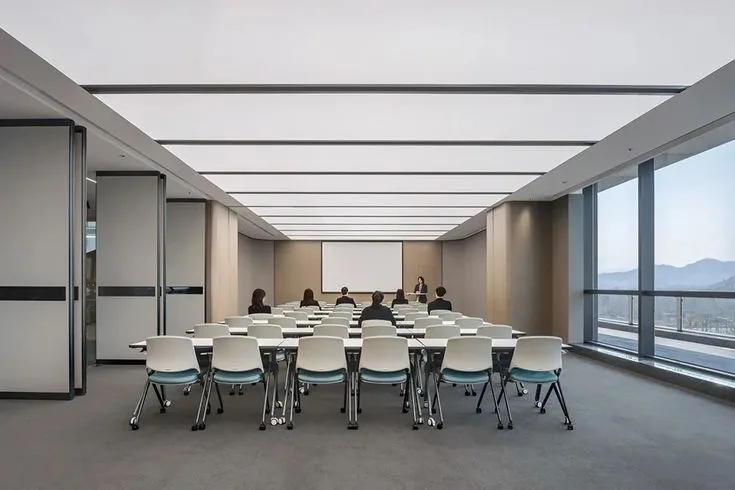
Philippine campuses are under constant pressure to do more with the rooms they already have. Enrolment grows, schedules collide, and a hall that sits empty between assemblies is floor area that isn’t earning its keep. Operable walls — also called movable or folding partition walls — let a single space flex between several uses: an audio-visual room becomes two classrooms, a covered court hosts an assembly on Friday and exams on Monday, and a library carves out a quiet study zone on demand.
For schools and universities, that adaptability is the whole point. Here’s where movable partitions fit across a campus, and how to specify them so they perform through years of daily use.
A fixed classroom does one job. A dividable hall does three — without pouring a single new wall.
Why Philippine campuses need flexible space
School buildings are expensive and slow to extend, yet timetables change every term. Flexible partitions let facilities teams reshape rooms in minutes instead of months — splitting an oversized hall into right-sized teaching spaces, then reopening it for a town-hall or graduation. One room earns its keep across mornings, afternoons and weekends, which is exactly the kind of flexibility benefit that makes movable partitions pay for themselves.
Where operable walls work across a campus
Almost any large, multi-use room is a candidate. The most common applications we see in Philippine schools and universities:
- Classrooms & AVR rooms — divide one large room into two teaching spaces, or open them up for group sessions.
- Multipurpose & assembly halls — scale a covered court or auditorium up for assemblies and down for simultaneous activities.
- Libraries — section off a silent study zone or a discussion room without permanent construction.
- Laboratories & training rooms — reconfigure for lectures, practicals or examinations.
- Function & canteen spaces — split for events, then reopen for daily use.
It’s the same principle behind operable walls in hotels, applied to the rhythms of a school week.
Acoustics for exams and simultaneous classes
The single biggest reason a school divider disappoints is sound. If two classes run either side of a thin partition, neither can concentrate. Acoustic performance is measured by the Sound Transmission Class (STC): the higher the number, the more speech the panel blocks.
What rating to target
For ordinary classrooms, an STC in the low-40s keeps normal teaching from carrying next door. Exam halls, music rooms and libraries — where quiet is the point — deserve a higher rating. A dense, layered panel paired with a complete perimeter seal is what turns a folding partition into a genuine acoustic divider; our guide to how acoustic panels improve privacy explains why.
Spec acoustics for the noisiest use, not the average
Choose the STC target for the most demanding thing the room will ever do — back-to-back exams, a music class beside a lecture — and the divider will handle everything quieter with ease.
Safety and single-person operation
In a school, a partition has to be effortless and safe. A top-hung system runs from an overhead track with no floor channel to trip on, and a well-engineered movable wall glides closed in under a minute under one staff member’s hand. Look for controlled motion, secure parking when the panels are stacked, and easy-grip handles. Just as important is the core: VersaWall panels use a fire-retardant marine-plywood core with high-density rock-wool infill, so the partition supports the building’s fire strategy rather than working against it.
Finishes that survive daily school use
Campus surfaces take a beating. Choose hard-wearing, easy-clean faces — durable laminates or melamine for corridors and labs, padded acoustic fabric where quiet matters, and tempered glass where you want to borrow daylight or keep an eye on a divided room. You can even mix finishes on a single wall. Browse the full finishes range and shortlist what suits each space.
Matching a model to your campus
The right platform depends on ceiling height and how much quiet each room needs. Lighter, everyday classrooms are well served by a flexible entry platform; tall multipurpose halls and auditoriums call for a higher-performance system.
Not sure which fits? Put them side by side on the VersaWall range, or tell us the room and we’ll recommend one.
Planning and budgeting a school project
Price tracks the things that are engineered in from day one — size, acoustic rating, finish and any pass doors — rather than a flat per-room figure. For procurement, it helps that VersaWall is a Platinum Member of PhilGEPS, which simplifies government and public-school purchasing. Get the numbers right with our breakdown of operable wall cost in the Philippines.
Five things that speed up a campus quote
- Room dimensions — opening width and floor-to-ceiling height.
- Use of each side — classes, exams, assembly or events.
- Acoustic target — how quiet each room must be.
- Finish preference — laminate, fabric, glass or a mix.
- Pass door — whether staff need to move between divided rooms.
When you’re ready, request a tailored quote or book a demo to feel the glide and acoustic seal for yourself.
Frequently asked questions
What STC rating do schools need for classrooms?
For ordinary teaching spaces, an STC in the low-40s keeps normal speech from carrying between rooms; exam halls, music rooms and libraries that demand quiet are better served by a higher rating. Match the acoustic target to how the room is actually used.
Can students or teachers operate the wall safely?
Yes. A top-hung partition on smooth rollers needs no floor track and can be opened or closed by one adult in under a minute. Schools usually have staff operate it, and panels can be specified with safe, easy-grip handles and controlled motion.
Are operable walls fire-safe for school buildings?
Quality movable partitions use a fire-retardant core — VersaWall panels combine marine plywood with high-density rock-wool infill — so they support the building’s fire strategy rather than compromising it.
How much does an operable wall for a school cost in the Philippines?
It depends on size, acoustic rating, finish and door options rather than a fixed rate. See our guide on operable wall cost in the Philippines, or request a tailored quote for your campus.
Tell us about your space and we'll recommend the right wall.
Get a tailored quote, or book a 30-minute demo to see the glide and acoustic seal for yourself.