Operable walls in Manila: how to choose a supplier and plan your fit-out
Metro Manila is where most operable walls in the country get installed — and where the fit-out is hardest. Here's how to choose an operable wall supplier in Manila, and what working inside a BGC, Makati or Ortigas tower actually demands.
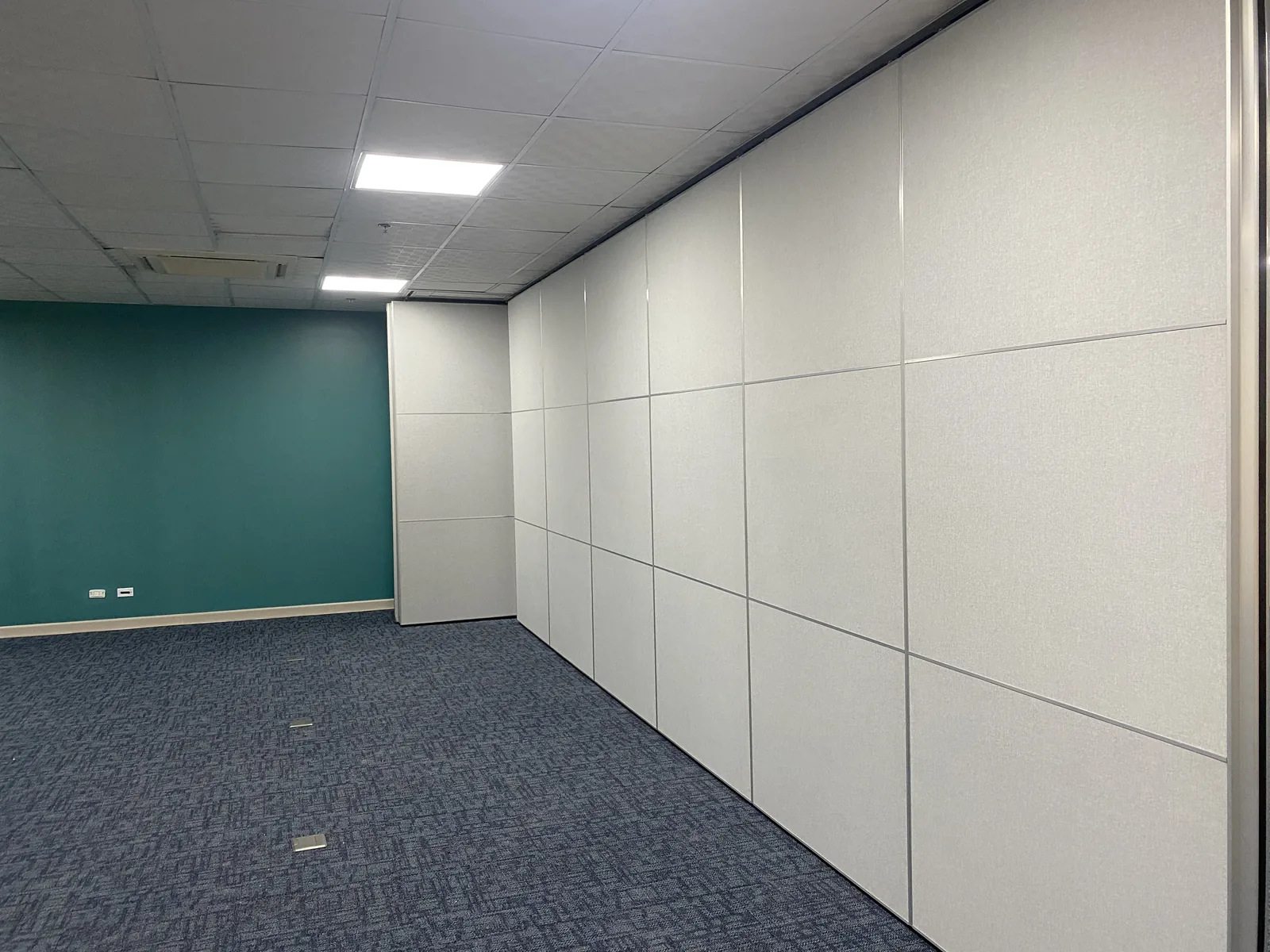
More operable walls are installed in Metro Manila than anywhere else in the country — and Metro Manila is also the hardest place to install one. The wall itself is the straightforward part. The difficulty is that almost every project sits inside a finished, occupied, tightly managed building, where a loading dock booking can matter more than a panel specification.
This guide covers what to ask an operable wall supplier in Manila, what fit-out inside a Metro Manila tower actually demands, and what genuinely moves the price.
In Metro Manila the wall is rarely the constraint. The building is.
Why Metro Manila specifies operable walls
Floor space in the capital’s business districts is among the most expensive in the country, which changes the maths on how a room earns its keep. A room that serves one purpose is a room that sits empty for most of the week. An operable wall lets the same floor plate be a single large space in the morning and two or three separate rooms by the afternoon.
Offices in BGC, Makati and Ortigas
Corporate fit-outs are the largest single category. A townhall space that divides into breakout rooms, a boardroom that opens into an event floor, a training room that splits in two — all of these avoid committing permanent square metres to a function that only runs occasionally. The case for movable partitions in offices is mostly a case about utilisation.
Hotels and function venues
Manila’s hotel and events market runs on flexible banquet space. A ballroom that subdivides can host three mid-sized functions at once, or one large one, without turning bookings away. This only works if the wall genuinely blocks sound between sections — which is an acoustic question, not a cosmetic one. See operable walls for hotels.
Schools, churches and government offices
Classrooms that combine for assemblies, multipurpose halls, and government offices that need to reconfigure without a renovation are all common. Public-sector buyers should confirm procurement eligibility early — PhilGEPS registration is usually a prerequisite rather than a preference.
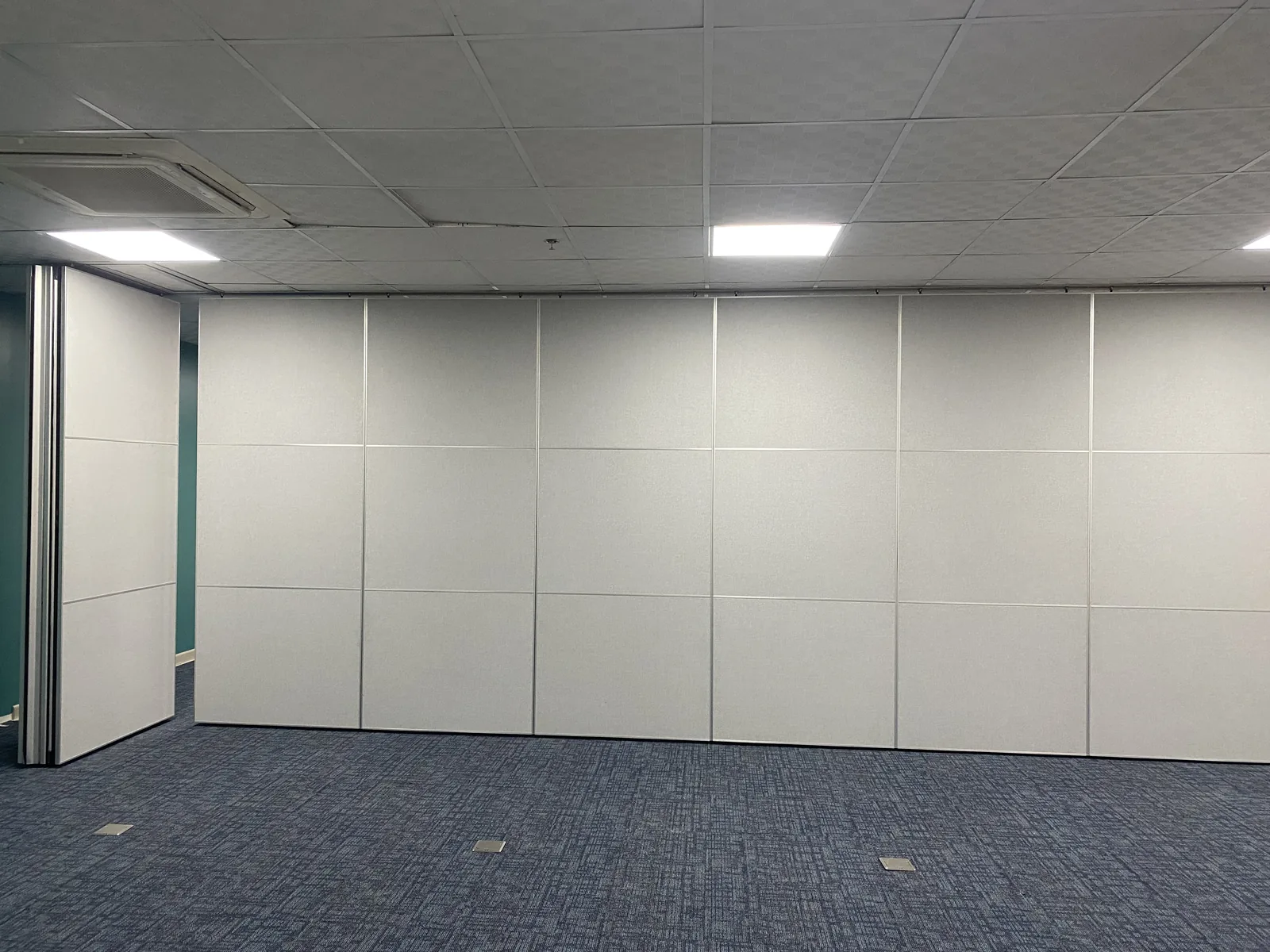
Choosing an operable wall supplier in Manila
The criteria for choosing a supplier nationally all apply here. But a few of them carry more weight in Metro Manila, and one is specific to it.
The supplier should install, not just deliver
This matters everywhere, and it matters most in a managed building. Installation quality is what determines whether a wall reaches its rated acoustic performance — a track that is not dead level or a bottom seal that does not fully drop will leak sound regardless of what the panel is capable of. When supply and installation are split between two vendors and the wall underperforms, you get an argument instead of a fix. A supplier with its own installers is accountable for the finished result.
Ask for acoustic figures, not adjectives
”Soundproof” is a marketing word. STC is a measurement. Ask what rating the system is tested to, and — just as important — how the perimeter seal is achieved at the head, the floor and the jambs. In an open-plan office where the wall meets a glazed façade or a services ceiling, the seal detail is usually where performance is won or lost.
Local service response and spare parts
An operable wall is a twenty-year asset with moving parts. Rollers, seals and handles wear. The practical question is not whether a warranty exists but how quickly someone can be on site, and whether the parts are held locally or ordered from abroad. A Metro Manila supplier with local stock will resolve in days what an importer resolves in months.
Credentials and a real address
Check that you are dealing with a registered company with a verifiable office, project references you can follow up, and the procurement credentials your organisation requires. VersaWall is distributed by Rocco Furnishings International, an SEC-registered company and a Platinum Member of PhilGEPS, and keeps an office at the 9th Floor, Philippine AXA Life Centre, 1286 Sen. Gil Puyat Avenue, Makati City.
Coverage is worth testing district by district rather than taking at face value — see what Metro Manila coverage should actually mean, from Makati and BGC through to Quezon City and Alabang.
Fit-out realities inside a Metro Manila tower
This is the section most buyers underestimate, and it is where a Manila project differs most from a provincial one. The panels are identical; the building is not.
Building administration and work permits
Most Grade A towers in BGC, Makati and Ortigas require a work permit before any contractor starts, along with contractor accreditation, insurance certificates and a method statement. Lead times vary by building and are entirely outside your supplier’s control. Raise this with building administration at design stage, not the week before delivery — permit turnaround is one of the most common causes of a slipped installation date.
Delivery windows, loading docks and service lifts
Operable wall panels are large, heavy and rigid. Getting them from a truck to the twenty-eighth floor is a genuine logistical exercise. Confirm early:
- Loading dock access — booking windows, height clearance, and whether deliveries are restricted to certain hours.
- Service lift dimensions — internal car size and door opening decide the maximum panel that can be carried in one piece.
- Route from lift to opening — corridor turns and door widths on the destination floor.
- Traffic windows — a delivery scheduled into EDSA peak hours is a delivery that arrives late.
A supplier who has worked in Metro Manila towers will ask these questions unprompted. Treat it as a good sign if they do.
Working in an occupied building
Very few Manila installations happen in an empty shell. Usually the floors above and below are occupied and working. That normally means after-hours or weekend work, noise restrictions during business hours, and coordination with other trades still on site. Plan the sequence so the ceiling, flooring and services around the opening are ready when the track goes in — a wall installed before the ceiling is finished tends to get disturbed afterwards.
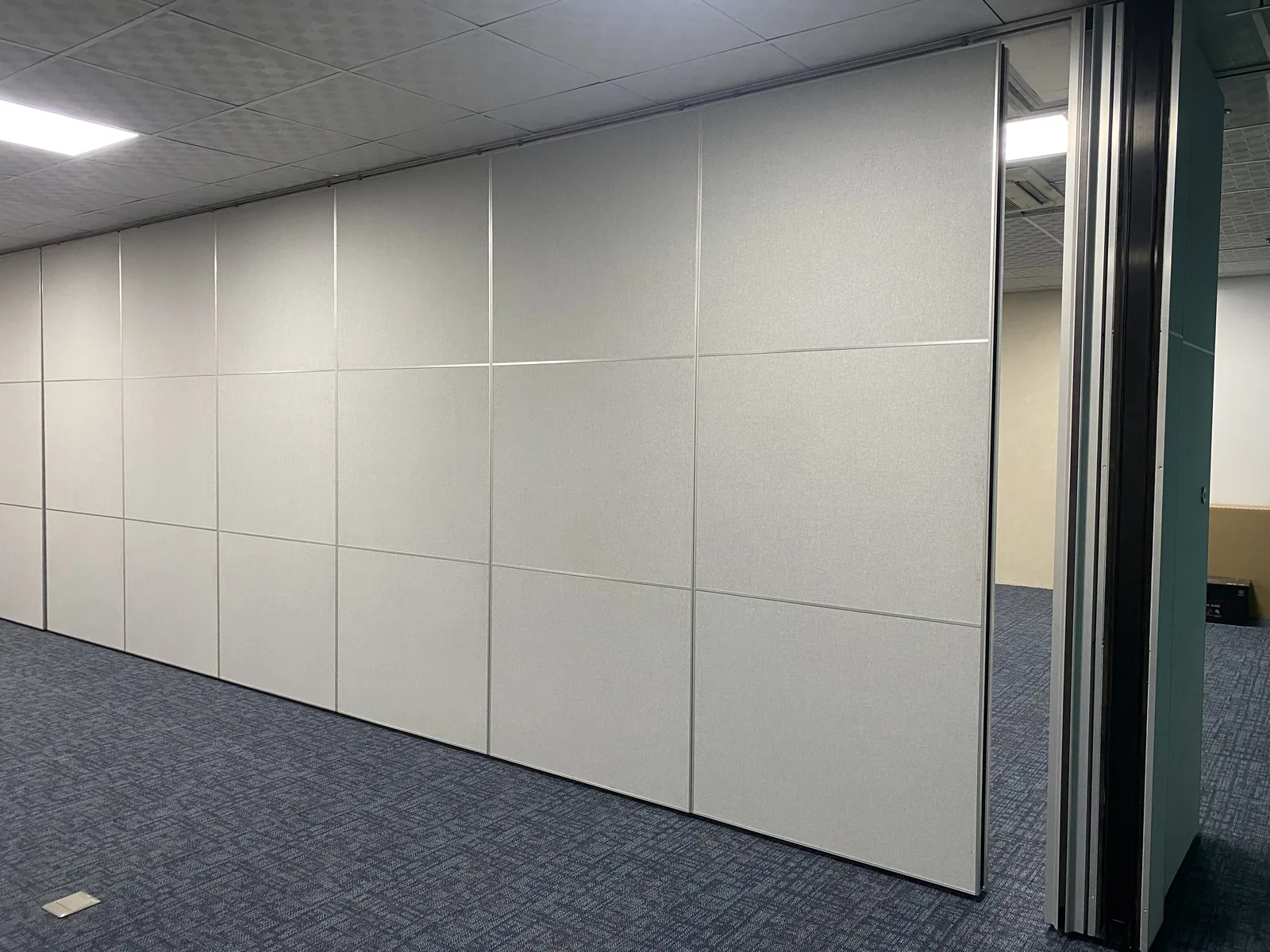
Structure, humidity and the long view
The wall hangs from the structure above, so what sits above the ceiling matters — slab, beam or steel support all change the detail. Manila’s humidity also argues for a fire-retardant marine-plywood core rather than a generic board, and for hardware that will not seize after a few rainy seasons. If the site is in a flood-prone area, raise it during the survey so the floor detail can account for it.
What moves the price in Manila
There is no per-square-metre rate worth quoting, because the same opening can differ substantially depending on what it has to do. The full cost breakdown covers this nationally; in Metro Manila specifically, these are the factors that move a number:
- Opening size and panel count — the single largest driver.
- Acoustic rating — a higher STC means a thicker, heavier, better-sealed panel, and it is usually the difference between two quotes that look similar.
- Finish — fabric, melamine, laminate or glass.
- Site access — restricted lift access and night-only work windows add installation time.
- Structural preparation — if the structure above needs reinforcement to carry the track, that is real work.
Freight, which can be significant for provincial projects, is rarely a major line item within Metro Manila. Be sceptical of a firm price offered before anyone has measured your opening — it usually means the specification is still undefined.
Matching the system to the opening
Three variables decide which system suits a space: how wide the opening is, how much sound has to be stopped, and how often the wall will be moved. The VersaWall range maps to those directly:
Lite — up to 3.5 m
69 mm panels, up to 42 dB. Suited to smaller meeting rooms and light division where full acoustic separation is not the priority.
Pro — up to 5.5 m
89 mm panels, up to 52 dB. The common choice for offices, training rooms and boardrooms that need genuine speech privacy.
Max — up to 15.0 m
104 mm panels, up to 56 dB. Built for ballrooms, function halls and large multipurpose spaces where sections run simultaneously.
If you are weighing the options against fixed construction, operable walls versus traditional room dividers sets out the trade-offs.
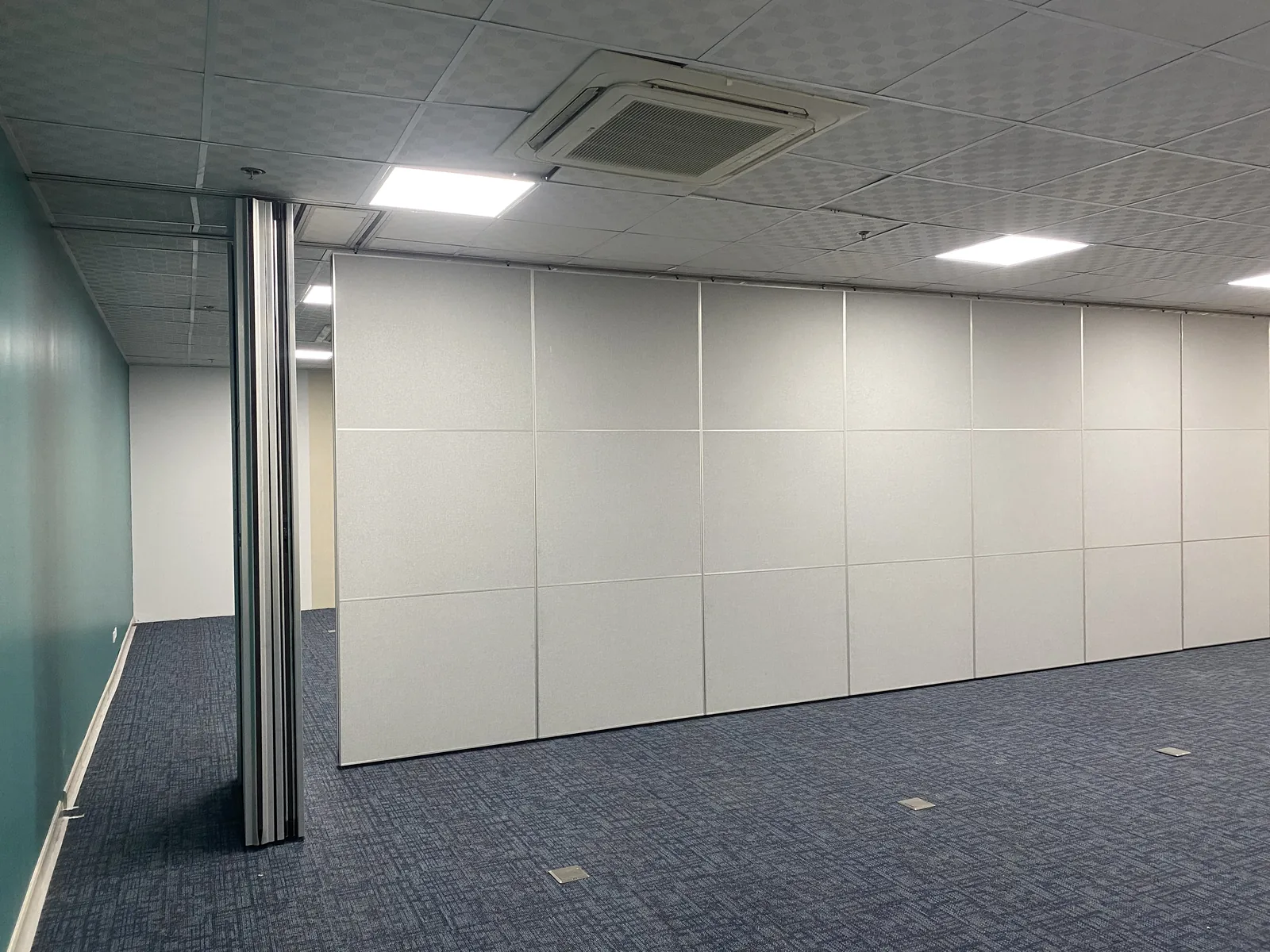
Start with a site survey
Every reliable quote for an operable wall starts with someone measuring the opening and looking at the structure above the ceiling. For a Metro Manila project, the survey should also establish the building’s permit process, the delivery route and the available work windows — because those shape the schedule more than the wall does.
If you are specifying an operable wall anywhere in Metro Manila, tell us the opening dimensions, what the space needs to do and which building it is in, and we will come back with a recommendation and a firm quotation.
Tell us about your space and we'll recommend the right wall.
Get a tailored quote, or book a 30-minute demo to see the glide and acoustic seal for yourself.